Crowd Clash: Run Master
Universe Game LabsRacing
4.3113.00 Reviews
- Version
- 1.3.0
- Installs
- 1.00M
- Age Rating
- Everyone
Screenshots
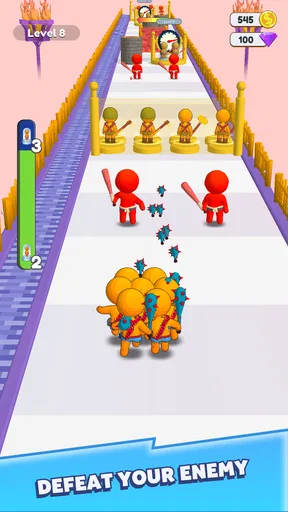
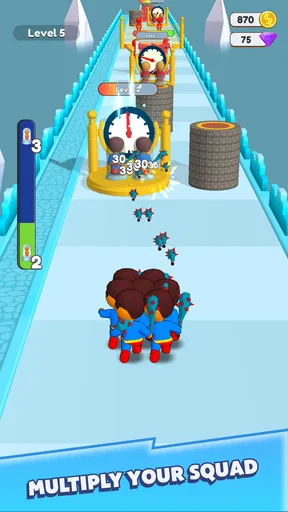
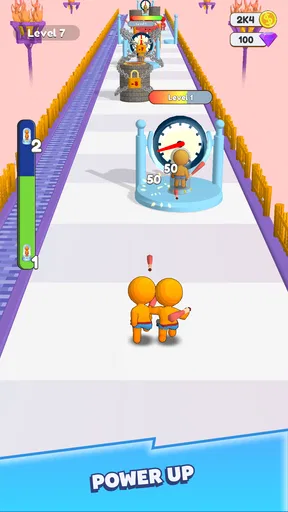
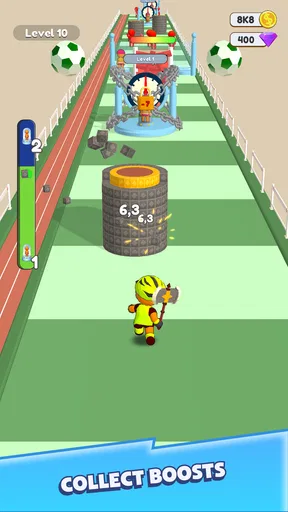
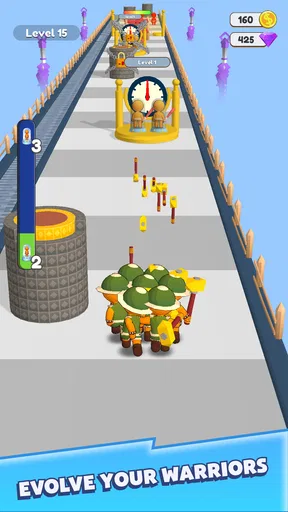
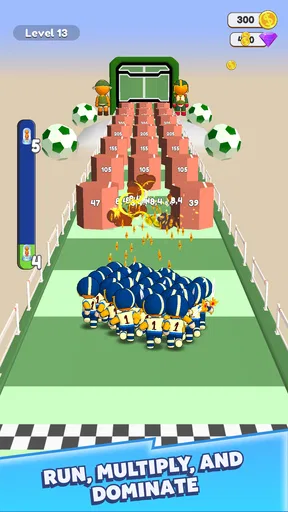
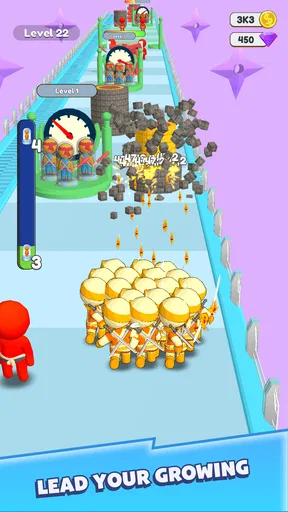
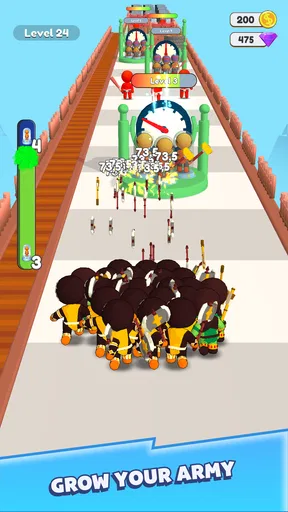
Our Review of Crowd Clash: Run Master
 Analysis by Appyee
I approached Crowd Clash: Run Master as a quick, easy-to-understand racing game rather than a traditional car or motorcycle racer. Its central idea is simple: guide a running crowd, collect more people, and finish with enough strength to overpower the opposing group. That makes the game immediately approachable, especially if you want something you can understand without reading a long tutorial.
My first impression was that the appeal comes from watching a small group become a larger one while moving through a course. The decisions are light, fast, and visual. You are not learning a complicated control scheme; you are trying to keep your crowd growing and avoid choices that leave you outnumbered. That simplicity is also the main reason I can imagine returning to it for a short break.
Universe Game Labs presents it as a free racing game for everyone, and that description fits the basic experience. It is available at no upfront cost, although optional purchases range from $0.99 to $99.99 per item. The game is suitable for an Everyone audience, runs on devices using Android 7.1 or later, and its current version is 1.2.6. Those details make it accessible to a broad group of players, but the purchase range is worth keeping in mind before handing the device to a child.
Getting from the first run to a meaningful win
I use this section to connect the early crowd-building choices with the moment a run starts to feel deliberate rather than lucky. My practical next step is to carry one lesson forward after each attempt—such as which decision preserved the group—so a retry has a clear purpose and a win feels earned.
What the opening experience feels like
The first useful thing to understand is that this is not a precision racing game built around realistic handling. I would not install it expecting detailed vehicle tuning, long strategic campaigns, or the kind of deep track mastery found in a serious racing title. The focus is crowd movement and quick decisions. You watch the path ahead, choose the more favorable route, and try to arrive at the confrontation with a stronger group.
That makes the game a good match for players who enjoy short arcade challenges. It is also suitable for someone who normally finds racing games too demanding. There is no need to memorize a large control layout before you can attempt a level. The important skill is reading the immediate situation: where your group can grow, where it may lose members, and whether a choice helps you reach the final clash in a better position.
I found that the game works best when I treated every run as a small puzzle with movement attached. Instead of rushing toward the first attractive option, I looked at the likely result of the whole route. A choice that adds people immediately is not automatically the best choice if it leads into a more damaging section afterward. That habit is one of the first meaningful improvements a new player can make.
The racing label can therefore be slightly misleading if you are expecting a contest based mainly on speed. Winning is more about arriving with the right crowd size than simply reaching the end first. The game’s identity sits between an arcade runner and a light crowd-management challenge. That combination is easy to pick up, though players wanting realistic racing may find it too abstract.
What to do when you start playing
For a first attempt, I recommend focusing on one goal: finish with a larger and healthier crowd than you started with. Do not try to optimize every decision immediately. Watch how the path changes your group, notice which choices increase or reduce it, and use the first run to learn the visual language of the course.
A practical routine is to pause mentally before each major choice. Ask yourself whether the option gives a reliable advantage or merely looks attractive because it is placed nearby. Then look beyond that choice and consider what kind of crowd you will carry into the next section. This is more useful than reacting at the last second, particularly when several options appear close together.
My first meaningful success came from making conservative decisions rather than chasing the biggest-looking reward. I kept the group stable, avoided unnecessary losses, and treated the final encounter as the result of all the earlier choices. That approach is reassuring for newcomers because it turns the game from a frantic reaction test into a sequence of manageable decisions.
Another useful tip is to resist restarting too quickly after a mediocre beginning. A weak opening does not always mean the run is lost. If later choices let the crowd recover, careful play can still produce a favorable finish. Learning when a run is genuinely beyond recovery is part of the game’s rhythm, and restarting after every small mistake can make the experience feel more stressful than it needs to be.
How to read the crowd instead of only the track
The most important shift in perspective is to watch your group as closely as the route. New players often look only at what is directly ahead, but the crowd itself tells you whether a decision is working. If it has grown comfortably, you can afford to think about preserving that advantage. If it has become small, the next choice should be judged by its ability to rebuild rather than by its visual appeal.
This creates a simple risk-and-reward trade-off. A route that promises rapid growth may also expose you to a larger loss if your timing or selection is poor. A safer route may produce a less dramatic increase but leave you in a stronger position for the closing confrontation. I prefer the safer choice when I am learning a stage, then experiment more once I understand how its sections connect.
That approach also helps with the feeling that some outcomes are sudden. When a crowd changes quickly, it can seem as if the game is deciding the result for you. In practice, the better response is to review the decision immediately before the change. Often the issue is not the final obstacle itself but the fact that the group entered that section too weakly.
For a short everyday session, this gives the game a useful loop. I can play while waiting for an appointment, take a few attempts during a commute break, or use it as a low-effort evening game. It does not demand the same uninterrupted attention as a long racing event. At the same time, the quick format means I would not choose it when I want a deep, story-driven experience.
Where first-time players may become confused
The biggest source of confusion is the difference between racing forward and actually racing well. Moving quickly is not enough if the crowd is weakened along the way. New players may also assume that the option with the largest immediate increase must always be correct. I found that the better question is, “What will this leave me with when the next decision arrives?”
It is also easy to focus so much on collecting that you forget the final opponent. The crowd is not being built for its own sake; it needs to be strong enough for the closing confrontation. I started thinking of the run in three parts: build an advantage early, protect it through the middle, and arrive prepared for the ending. That mental structure made the game much clearer.
Another point worth explaining is that a loss does not necessarily mean the controls are difficult. The controls are approachable, but the choices still have consequences. If the game feels unfair during the first few attempts, I would replay with attention to the route rather than simply moving faster. In my experience, understanding the relationship between crowd size and the final clash is more valuable than trying to force a quick finish.
Because the title is free, some players may also wonder whether they must spend money to enjoy it. I would begin without buying anything and decide whether the basic loop holds my attention. Optional items can cost from $0.99 to $99.99, so I would enable purchase safeguards on a shared device and avoid treating in-app spending as part of the normal learning process. The game is playable as an accessible free download, but the presence of purchases means families should still use sensible account controls.
How it compares with familiar racing alternatives
Compared with conventional racing games, this one removes much of the usual pressure around steering, braking, vehicle choice, and track memorization. That is its strongest advantage for casual players. Someone who wants a quick test of judgment may find it more welcoming than a racer that expects precise control from the first minute.
On the other hand, players who enjoy realistic driving physics, competitive lap times, or extensive car customization should look elsewhere. Crowd Clash: Run Master does not appeal for the same reasons as a simulation racer. Its satisfaction comes from building numerical strength through route decisions and then seeing that advantage matter at the end.
It also differs from endless runners that are mainly about surviving as long as possible. Here, I feel more purpose in each choice because the run is directed toward an opposing crowd. That gives the short sessions a clearer objective. Still, anyone who prefers open-ended score chasing may find the structured crowd-versus-crowd format less expressive than a traditional endless runner.
Against deeper strategy games, it is much lighter. You are not managing a broad economy or planning a campaign across many systems. The benefit is that the game communicates its immediate goal quickly. The trade-off is that players searching for long-term strategic complexity may run out of interesting decisions sooner than they would in a more demanding title.
Who will enjoy it, and who should skip it
I would recommend this game to someone who likes bright, compact arcade challenges and wants a clear objective in each run. It is especially suitable for first-time players who prefer learning by doing. The crowd concept is easy to understand, and the path from the opening movement to a successful final clash can be learned through a handful of careful attempts.
It also suits families looking for an Everyone-rated game, provided an adult keeps an eye on optional purchases. The simple premise makes it easy to explain to a younger player: grow your group, avoid weakening choices, and finish stronger than the opposing side. I would still encourage parents to review purchase settings because the free entry point does not remove the possibility of spending inside the game.
I would skip it if your main reason for downloading a racing title is authentic driving. It is also not my first choice for someone who wants a substantial narrative, highly detailed progression, or a multiplayer competition that depends on advanced racing skill. The game is intentionally focused, and that focus will feel refreshing to some players but limited to others.
Its public reception suggests that the concept has found an audience: the game holds a 4.2 average from around 3.2 thousand ratings, with over 100 thousand installs. I read that as a sign of solid casual appeal rather than proof that it will satisfy every racing fan. The smaller review count, at around 46 reviews, also encourages me to judge it by the actual play loop instead of treating the rating as a complete picture.
Small habits that make the game more enjoyable
My first practical tip is to separate learning attempts from winning attempts. During a learning run, deliberately observe how different route choices affect the crowd. During a winning run, use the safer decisions you already understand. This prevents every loss from feeling wasted and gives you a clearer reason to replay.
Second, think about crowd preservation as a resource. A large group gives you room for error, while a small one makes every later choice more important. That does not mean you should always choose the least risky path. It means you should spend your advantage deliberately, especially when a more aggressive option could produce a much stronger finish.
Third, judge the final result by the quality of the route, not only by whether you won. If you succeed after losing most of the group early, that may reveal a recovery path worth remembering. If you lose despite a strong beginning, look for the point where the advantage stopped growing. This turns repetition into useful practice instead of random retrying.
Finally, keep sessions short when the decisions begin to feel automatic. The game is at its best when I am paying attention to the crowd and making small choices with a clear purpose. Playing while distracted can make a simple mistake feel irritating, especially because the controls are easy enough to encourage casual multitasking.
My recommendation after spending time with it
For me, the strongest part of Crowd Clash: Run Master is how quickly it gives a new player a concrete target. You do not need to understand a large system before your first useful attempt. Build the crowd, protect it, and use it to overcome the opponent. That clarity makes the game approachable without making every decision meaningless.
The limitations are equally clear. The experience is narrower than a full racing game, and its appeal depends heavily on whether you enjoy repeating short crowd-building challenges. The optional purchase range also deserves attention, particularly on a shared device. I would not describe it as a replacement for a serious racer; I see it as a lighter alternative for quick sessions.
Universe Game Labs has made a game that is easy to start and reasonably satisfying once you understand that crowd strength matters more than raw forward movement. My advice is to begin with a patient run, study how each choice changes your group, and aim for a stable finish rather than the flashiest route. If that loop feels rewarding, the free entry point makes it easy to keep exploring. If you are looking for realistic driving or deep racing systems, you will probably be happier with a different kind of game.
Privacy and Permissions
See what permissions an app requests and how it handles your data.
- Wi-Fi connection information
- view Wi-Fi connections
- Other
- view network connections, full network access, prevent device from sleeping, Google Play license check
Verdict
Strengths of Crowd Clash: Run Master
- Fast-paced runs make each session easy to pick up and play.
- Simple controls are accessible for players of all ages.
- Unlockable characters add variety and encourage continued play.
- Short levels work well for quick gaming breaks.
- Bright visuals make the action easy to follow on mobile screens.
Limitations of Crowd Clash: Run Master
- Repetitive obstacles may reduce the challenge after extended play.
- Progress can feel slow without frequent upgrades or rewards.
- Ads may interrupt gameplay, depending on the version and connection.
- Precision can be frustrating when movement feels difficult to control.
- Limited depth may disappoint players seeking a complex strategy game.
Other Releases by Universe Game Labs
View All
Gangster Miami RP: Grand City
Role Playing4.7
Similar Picks in This Category
View All
Hill Climb Racing
Fingersoft4.3

Dr. Driving
SUD Inc.4.2

Traffic Rider
skgames4.5

Asphalt 8 - Car Racing Game
Gameloft SE4.6

Race Master 3D: Car Racing
Beresnev Games4.6

Extreme Car Driving Simulator
AxesInMotion Racing4.3
Frequently Asked Questions
What is Crowd Clash: Run Master and how is it played?
Crowd Clash: Run Master is a casual action game built around running through obstacle-filled levels while trying to grow and control a crowd. As you move forward, you collect characters, pass through helpful gates, avoid traps, and compete against opposing groups. The main objective is to finish with the strongest crowd possible and overcome challenges at the end of each stage.
Is Crowd Clash: Run Master free to download and play?
Yes, Crowd Clash: Run Master can generally be downloaded and played without an upfront purchase. However, like many free mobile games, it may include optional advertisements and in-app purchases. Ads can appear between levels or during rewards, while purchases may offer bonuses or other conveniences. Check the store listing and your device settings before downloading, especially if children use the device.
Does Crowd Clash: Run Master require an internet connection?
The game may allow basic running and level gameplay without a constant internet connection, depending on the version installed and the device being used. Nevertheless, an internet connection is commonly needed for advertisements, rewarded bonuses, updates, purchases, and certain online features. If you plan to play offline, some rewards or functions may not be available until you reconnect.
Is Crowd Clash: Run Master suitable for children?
Crowd Clash: Run Master uses simple controls, colorful graphics, and straightforward gameplay, making it accessible to younger players. It generally focuses on cartoon-style competition rather than realistic violence. Parents should still review the age rating and privacy information because advertising, optional purchases, and data collection policies can vary by platform, region, and game update.
What should I know about ads and in-app purchases before playing?
Crowd Clash: Run Master may use advertisements as part of its free-to-play model, including ads shown between stages or optional videos that provide extra rewards. It may also offer in-app purchases for removing ads, obtaining currency, or progressing more quickly. These purchases are not usually required to understand the game, but disabling unauthorized payments is recommended if children can access the device.
Play our best games!


